T R O S Z C Z Y Ć
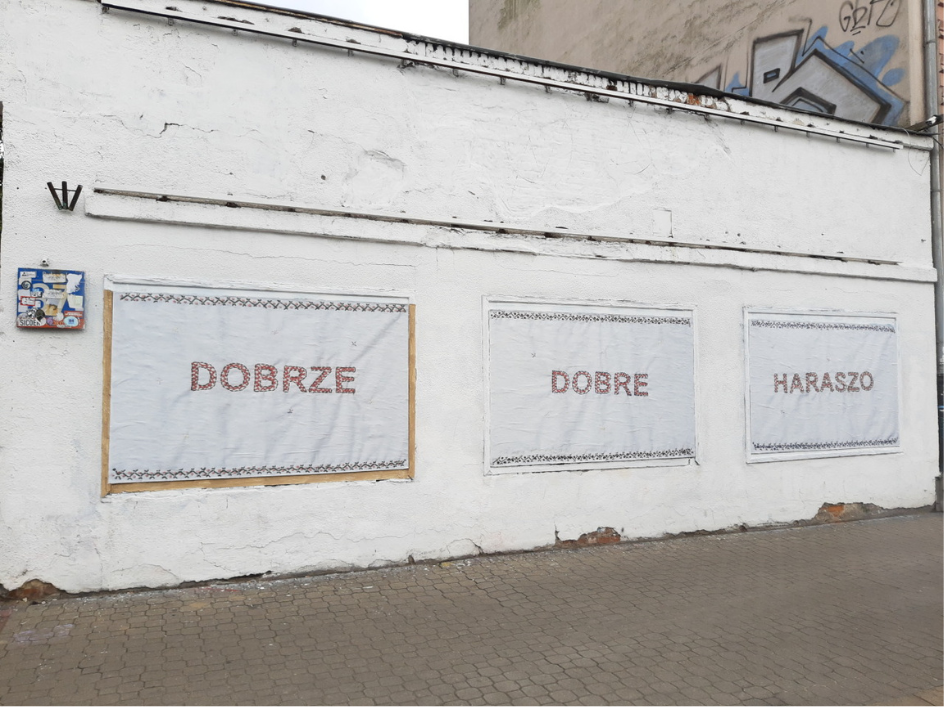
Hand embroidery on cotton fabric, screen print
2021
Photos: Zuzanna Sosnowska Bartek Górka
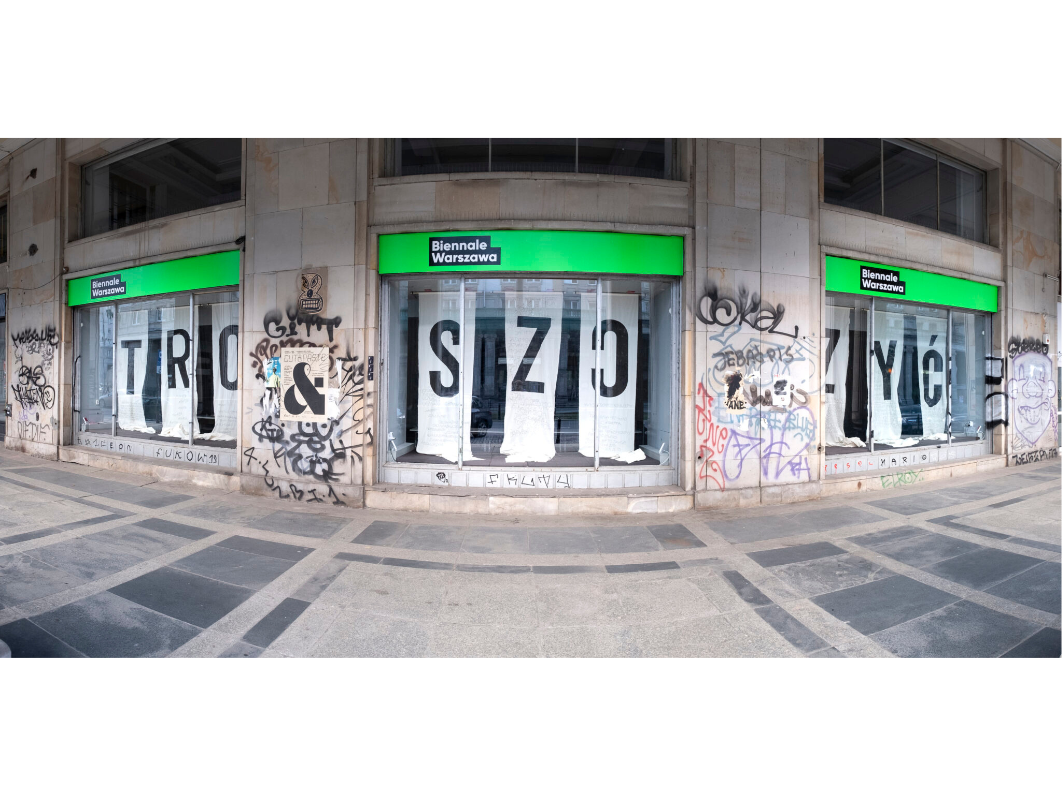
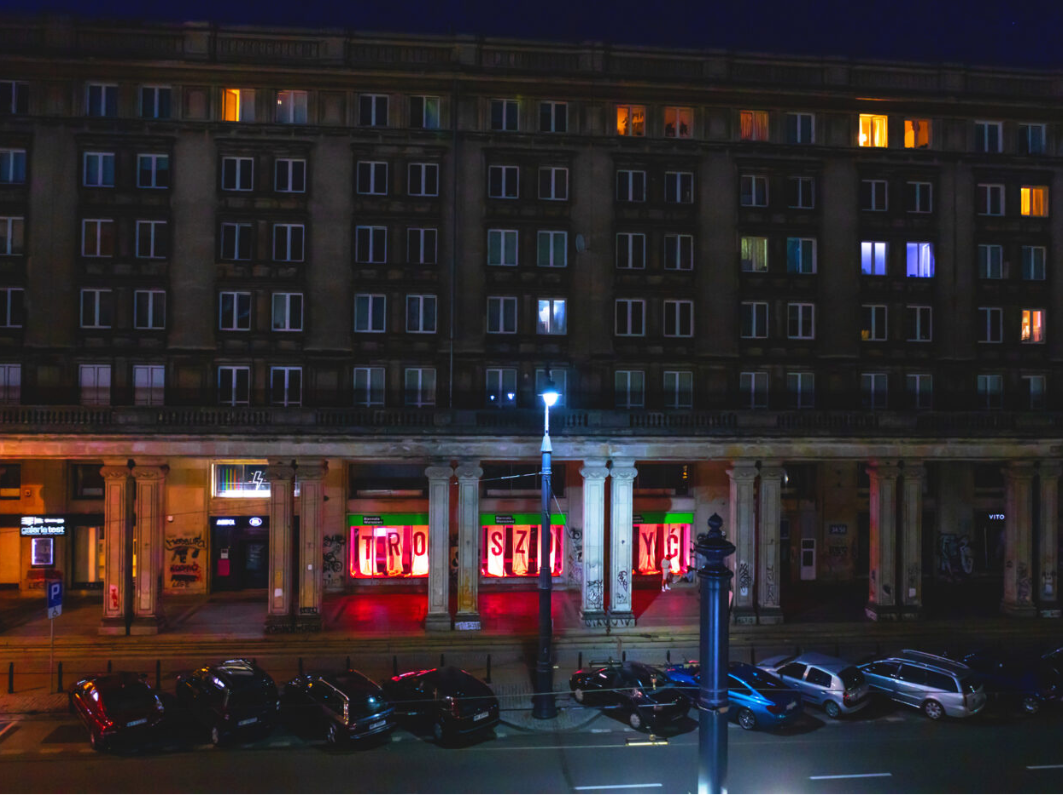
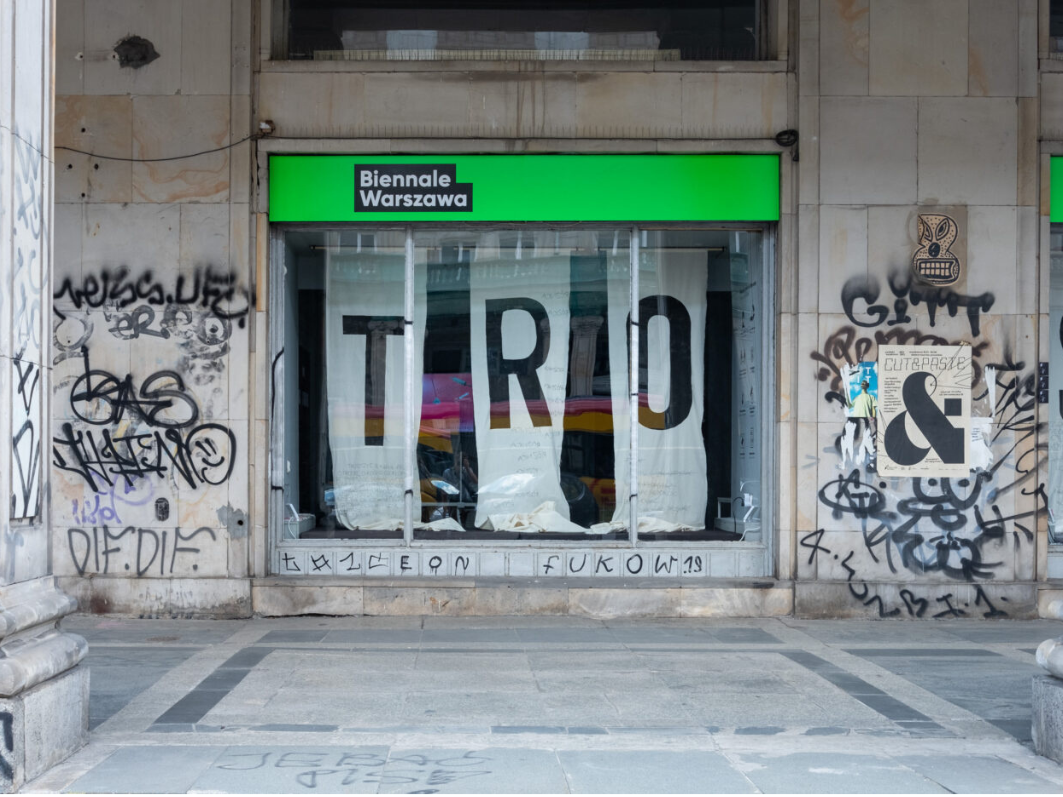
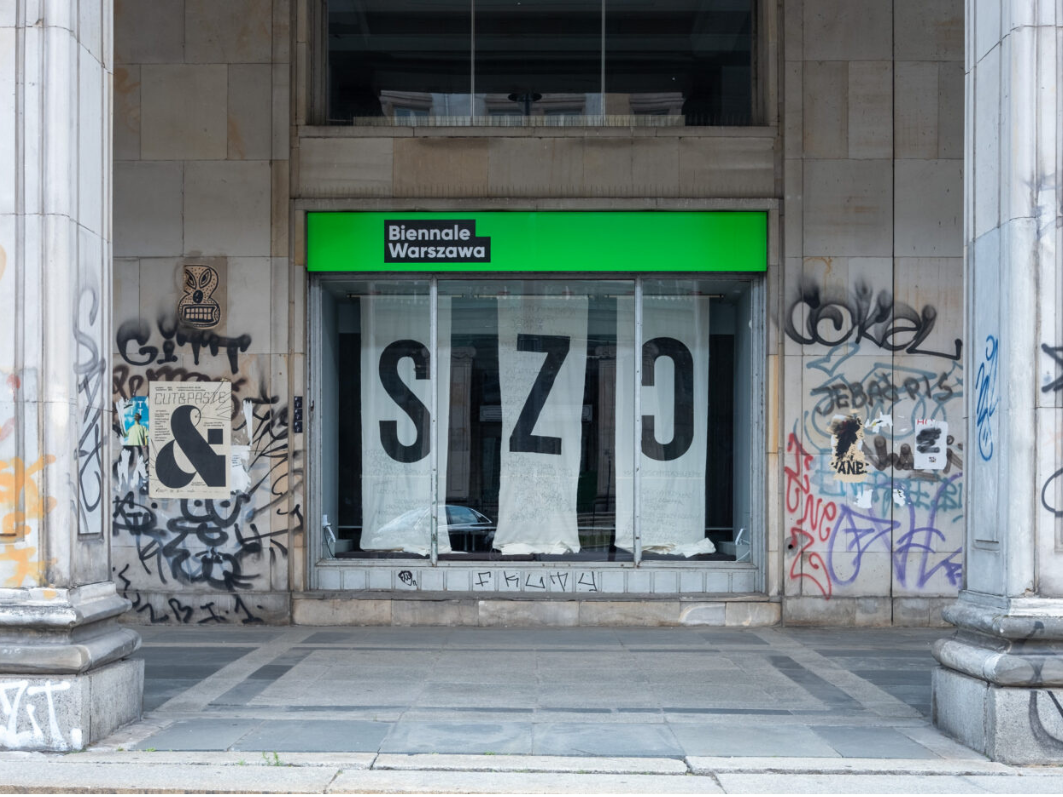
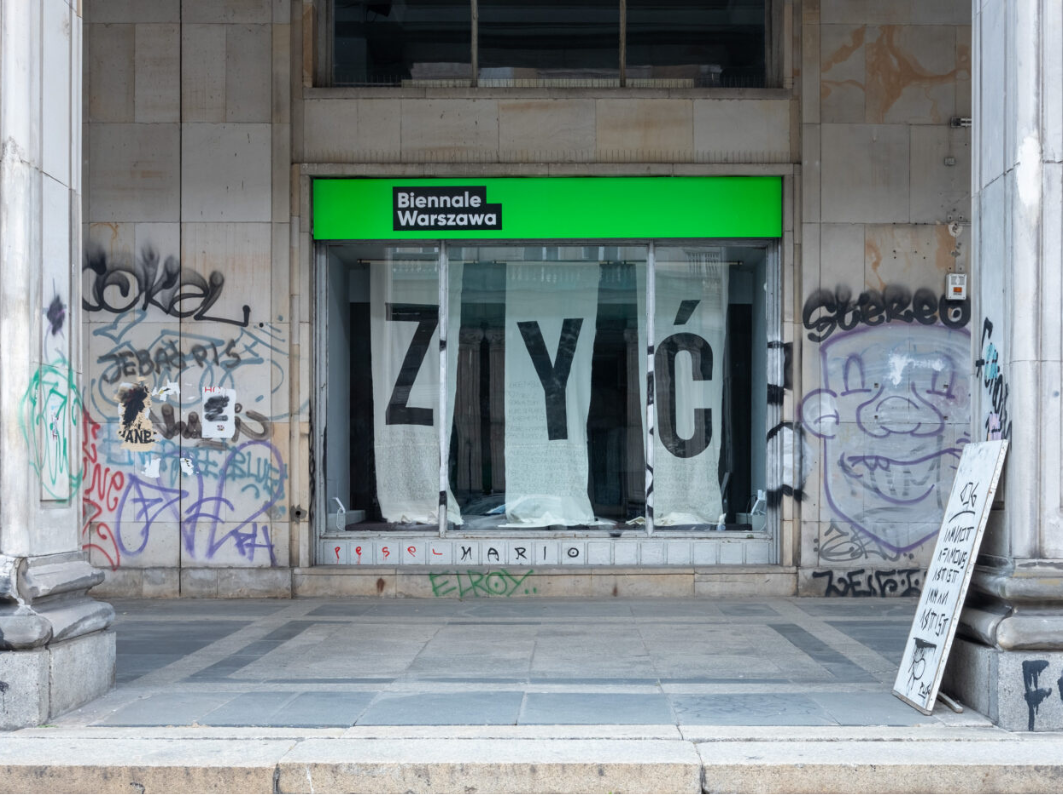
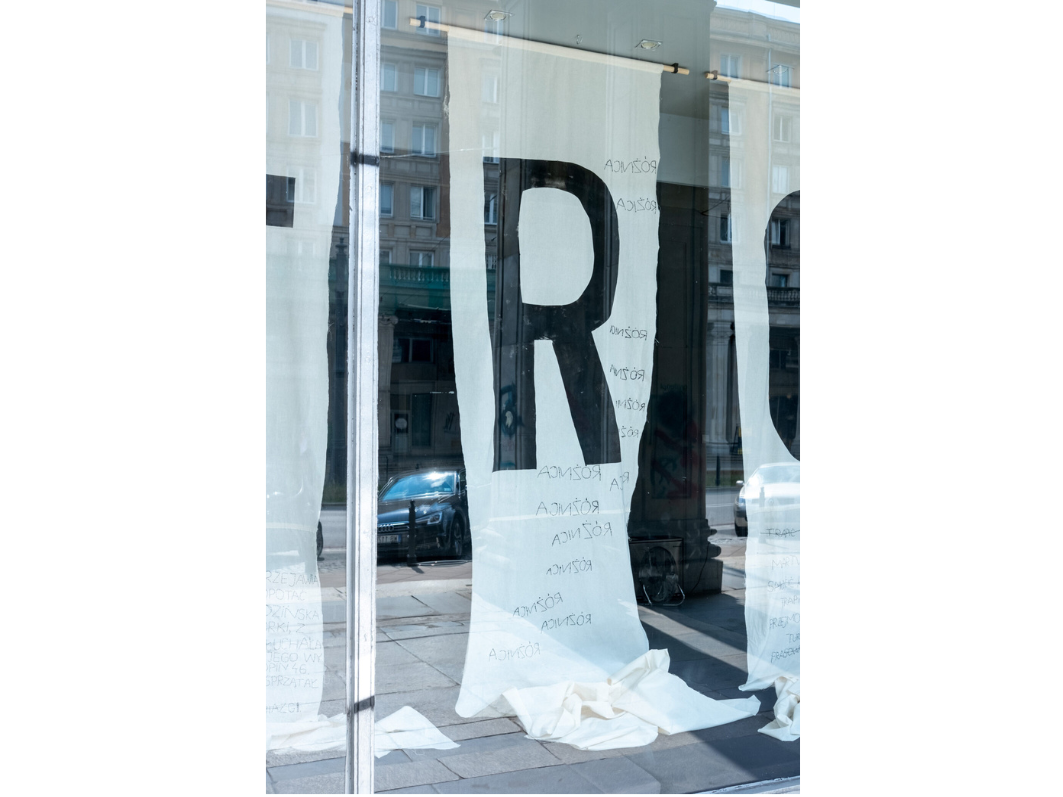
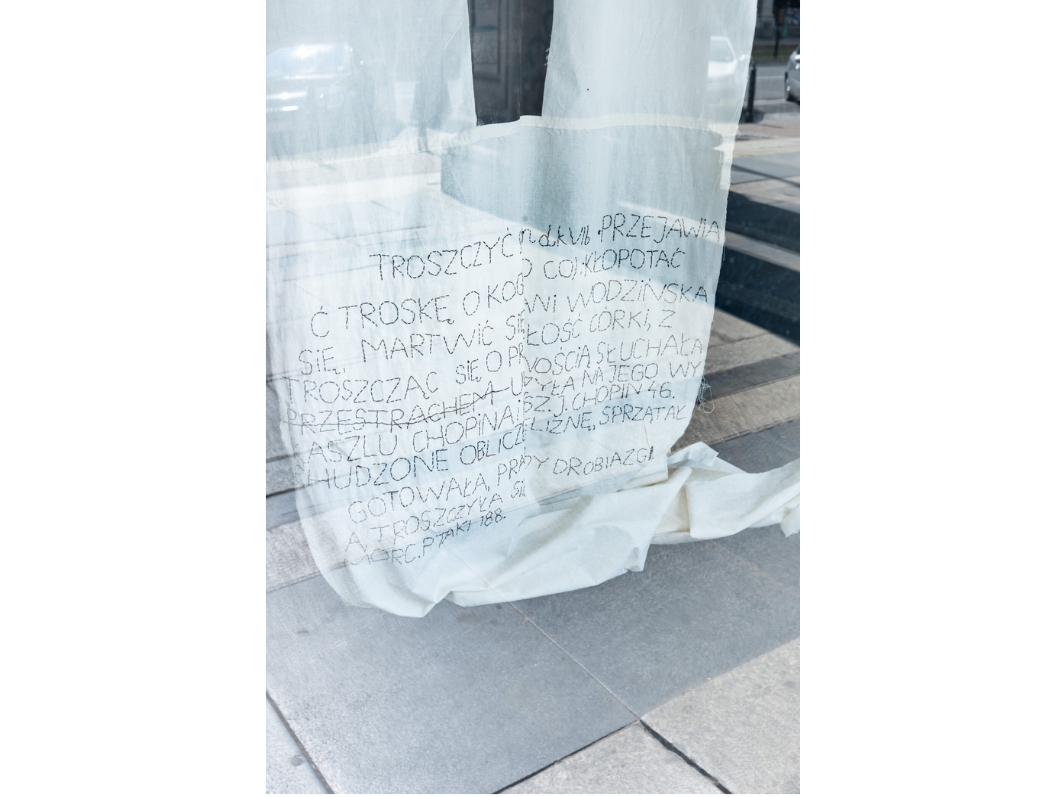
Troszczyć means to look after, to care for someone, something, or oneself. In Polish, troska also means worrying, bitterness, and trauma. Can everyday martyrdom be replaced by thoughtfulness and devotion? Drożyńska’s work Troszczyć presented in the windows of Biennale Warszawa explores the ethics and politics of care and the emotions associated with caring. The large, capital letters can be seen from the pavement on Marszałkowska Street, but to read the embroidered words, one has to move closer. Nine white canvases are clustered with slogans – some are crossed out, others appear as mirror images. To grieve, to trouble oneself, to fret, to worry, to be anxious, obligations not feelings, feelings not obligations.
The artist refers to her technique as “writing embroidery.” It is a way of writing that combines separate formal orders and different circuits of communication. Writing embroidery lies in between a book and a conversation with another person, between grounded knowledge and popular opinion, between official language and domestic chatter. Is there room for emotion and reciprocity in science? What can be done to turn care into a feeling, rather than an obligation? The installation is an attempt to break through the boundaries of language, which could help us get out of the impasse of habit and shift attention from the anxiety that accompanies care and concern to tenderness.
Monika Drożyńska took part in Biennale Warszawa’s residency programme, “COVID-19. What world after the pandemic?”, as part of which she explored the language that shaped the post-pandemic reality. Parallel to the exhibition of the artist’s work, Biennale Warszawa hosted a Forum on Care Practices, “Let’s plan a reproductive strike!”, crowning the series “Revolutions in Care,” whose curators addressed issues of social reproduction and strategies of resistance in the face of the care crisis.