Polish beetroots, European symbols
Performative event
2018
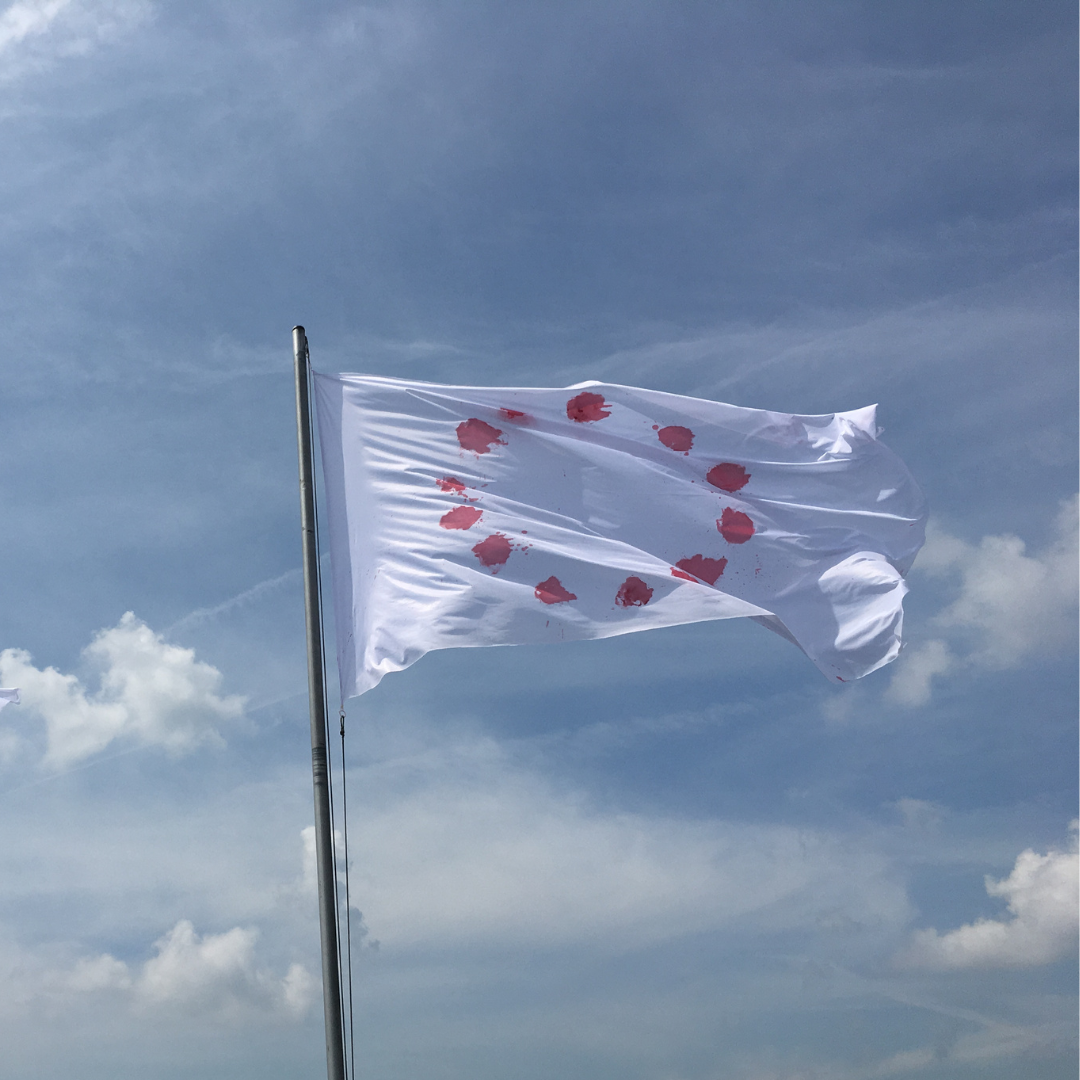
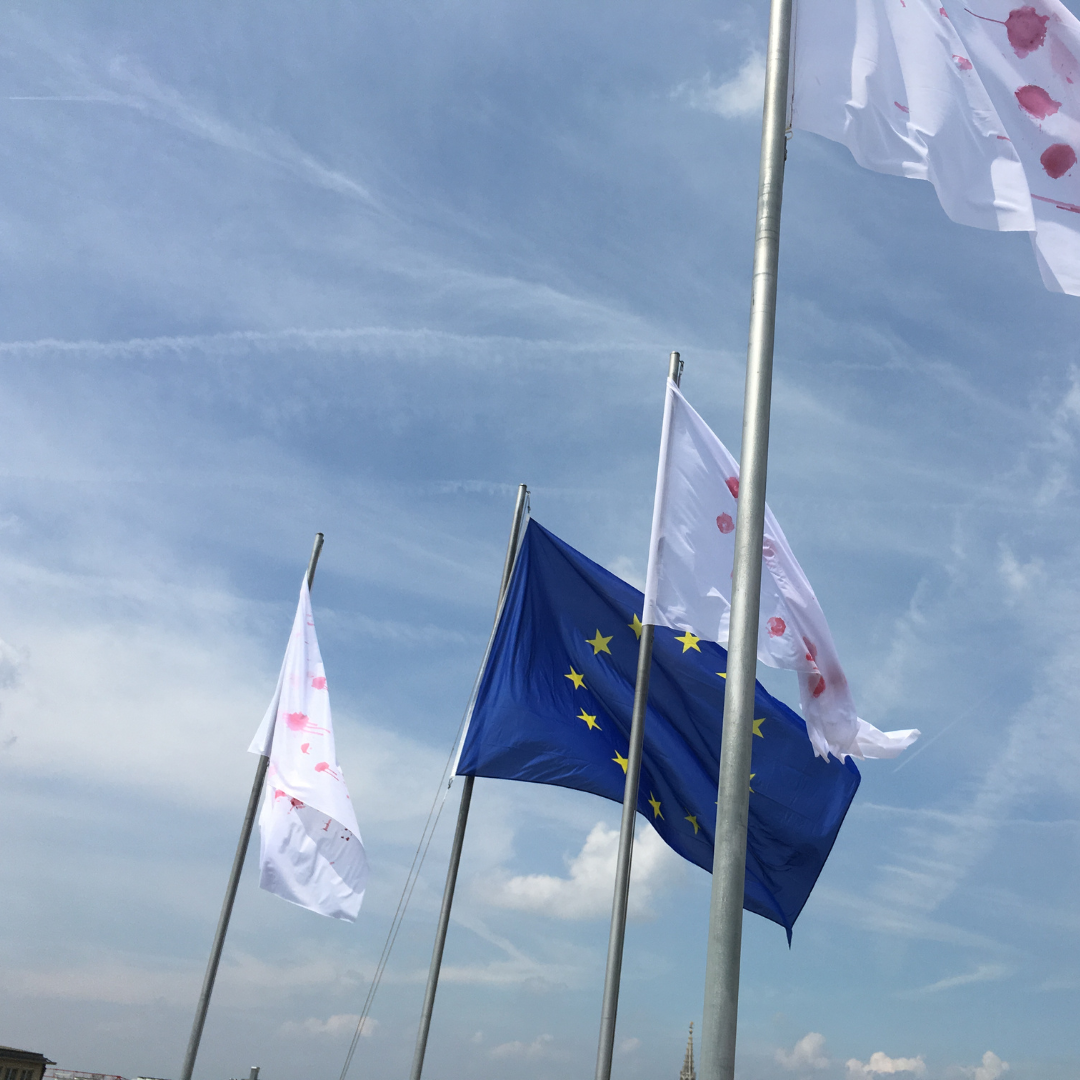
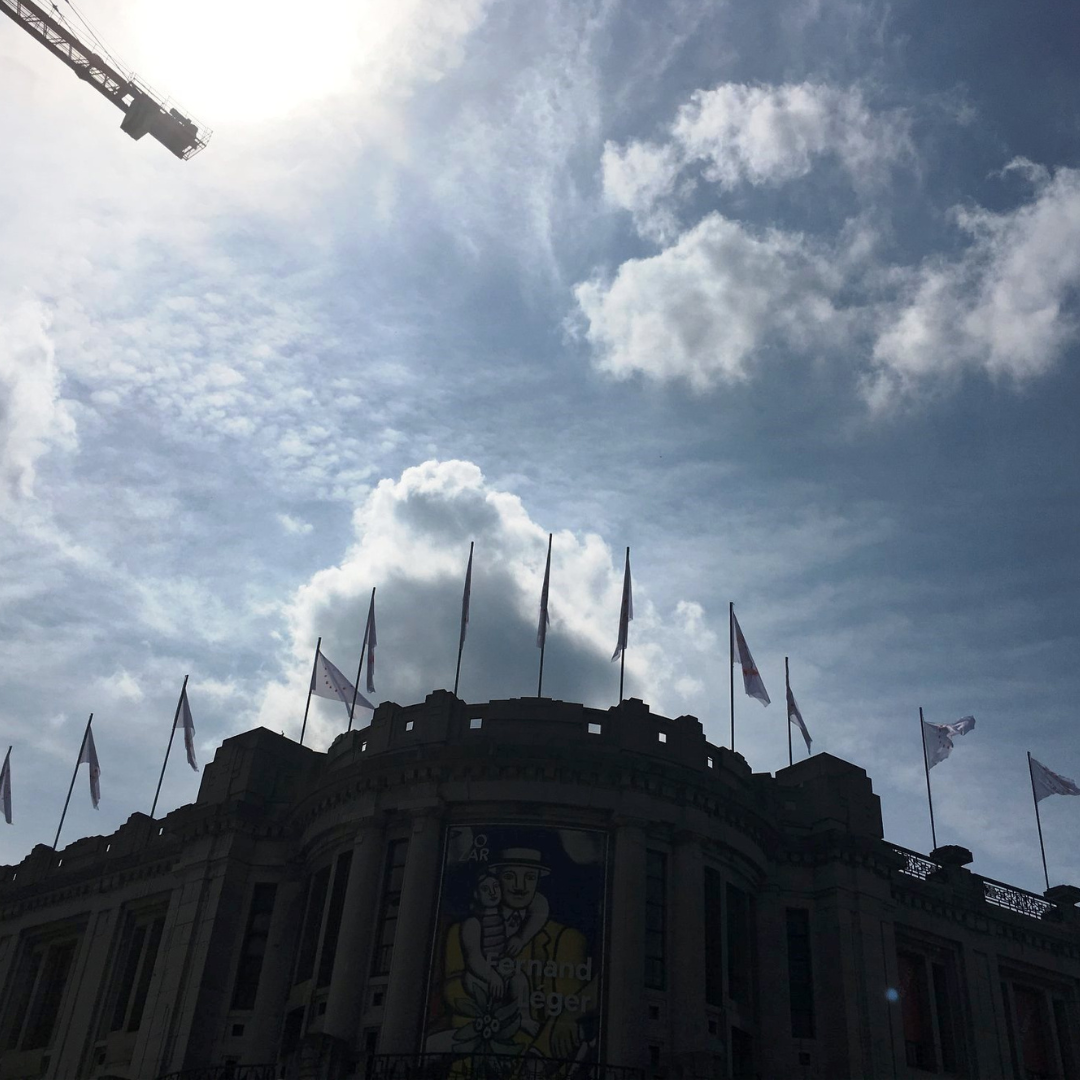
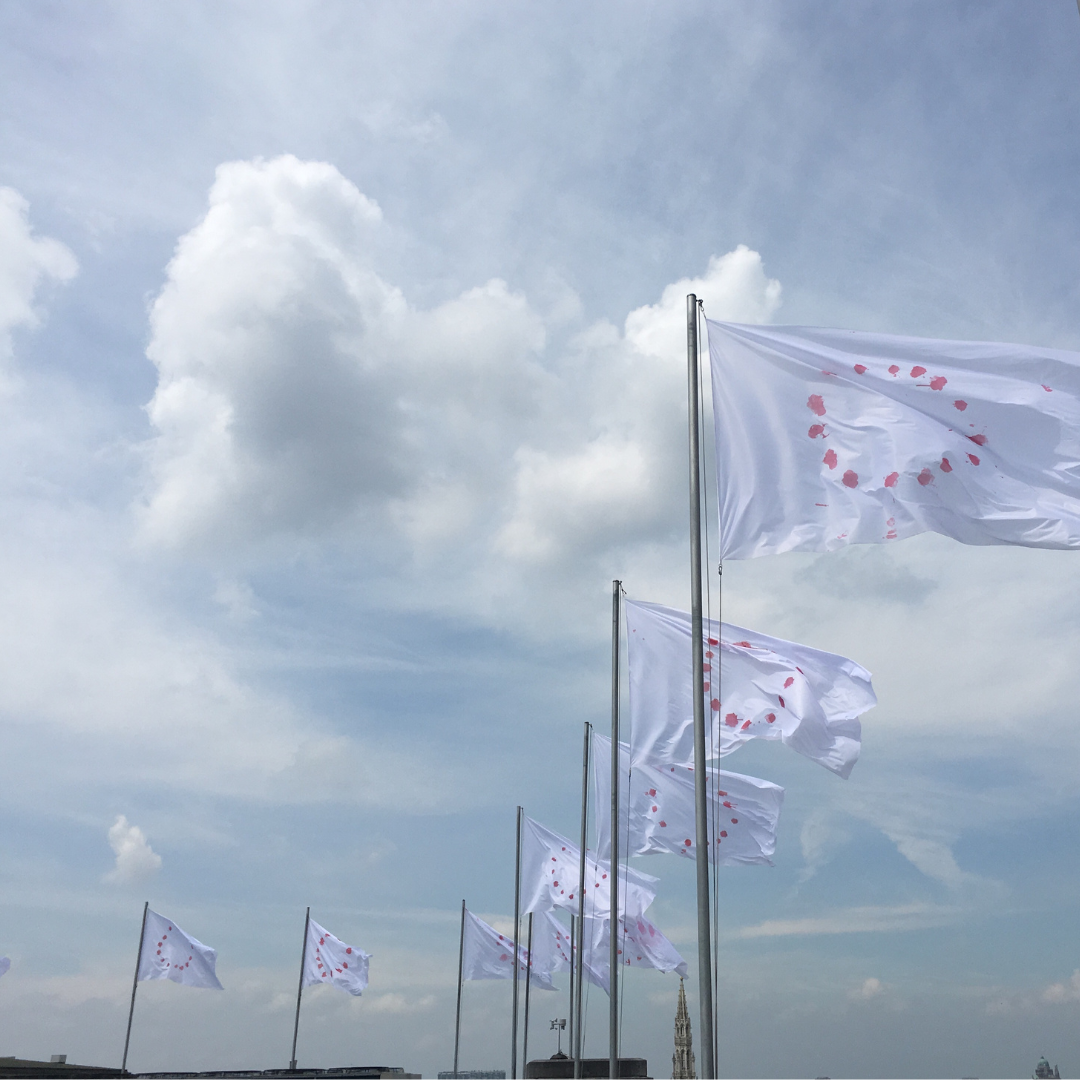
The artist transported twenty-five kilos of beetroot in her registered luggage from a farmer’s market in Kraków to Brussels. There, at a world-famous art gallery, Polish beets were pickled. Pickled/sour beetroot juice has turned into fabric dye and was used to sour the symbol of the European Union onto the fabric. The finished flags decorated the gallery’s main entrance.
As we read in the PWN Polish Language Dictionary, besides a vegetable, the word burak (beetroot) is also used as a derogatory term for someone from the countryside (“country bumpkin”) or someone behaving boorishly.
Pickling is an ancient – and still used today – way of preserving food in Poland, where pickled beets commonly were used ever since the early 19th century. They were pickled in every home, manor, and village. Beet pickling is still popular today and is universal affordable/available to every household.
Pickled beetroot juice is the basis of barszcz [borscht], a popular Polish soup. As we read in Lucyna Ćwierczakiewiczówna’s book “365 dinners, 5zł each” (first published in Warsaw, 1871), the goodness of borscht lies mainly in the fresh sour beetroot base: “Take a certain amount of beetroots, rinse them, peel them as carefully as possible, cut the bigger ones in half, put them in a bowl or a large clay pot and cover boiled, cooled, soft water. Place this in a warm place, for example in the kitchen over the chimney, and in four days at the latest the borscht will be ready.” This healthy concoction has extraordinary nutritional value: it contains vitamins C and B1 and many macro- and microelements. It is recommended in the treatment of anaemia, constipation and hypertension, and supports liver and kidney function. It cleanses the body and reduce acidity. What is more, it isn’t economically exclusive, but cheap and easy to prepare, it is a natural probiotic and a cure for many ailments.
The finished flags thus became a symbol of deepening economic inequality. Intense economic growth continues, but it only benefits those at the top. Food is political, and the language used to describe it has been appropriated. The natural has become exclusive, and the processed – economically accessible. Remember: pickling your own food and sleep are the most viable forms of protest in the post-poverty era.
The project was accompanied by a video series, the first season of which can be viewed below. The project was produced as part of the “Too soon, too late” event.
Bozar, Brussels, 2018