Ich bin du bist ich byt
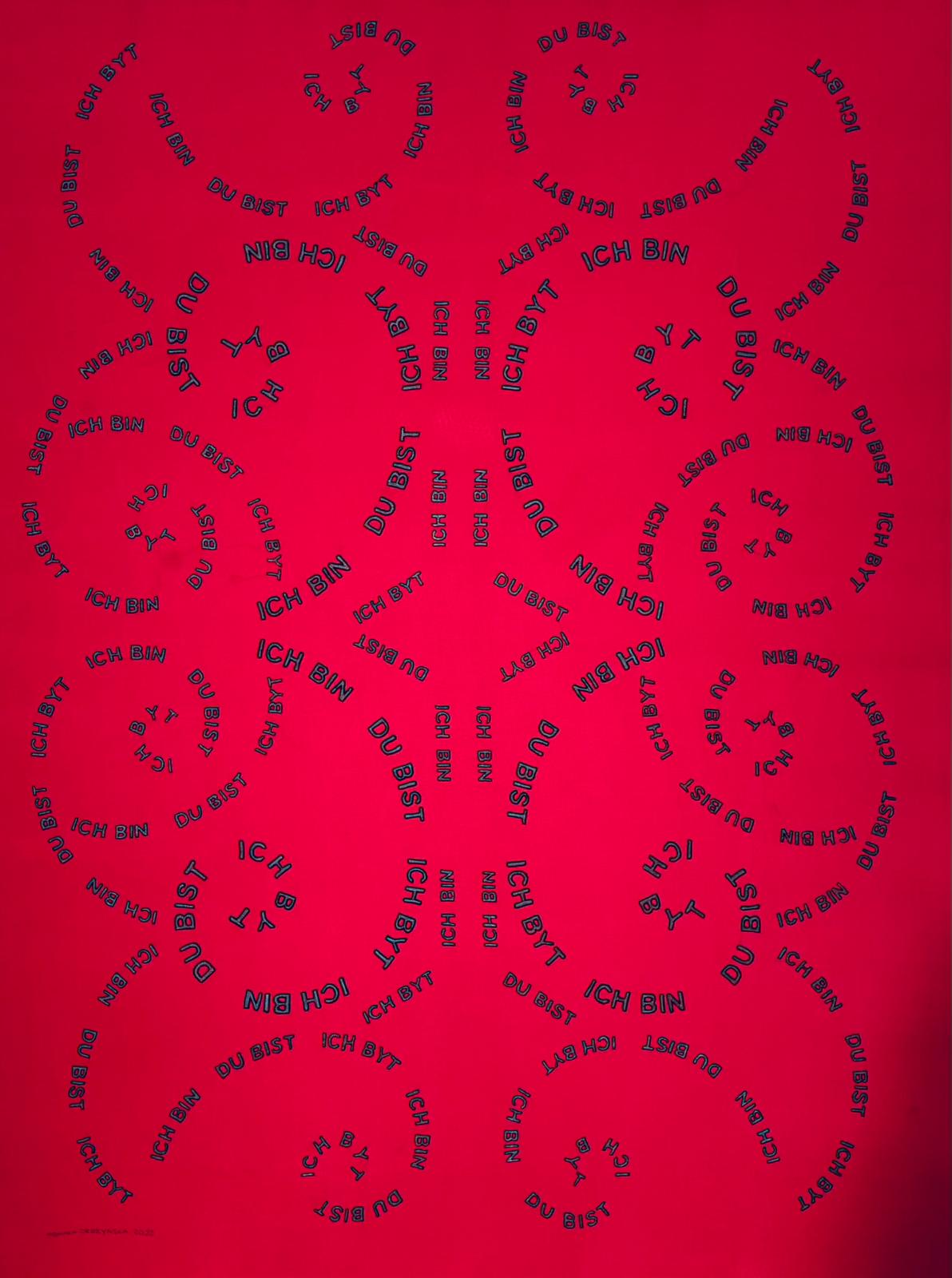
Hand embroidery on fabric
2025
200x160 cm
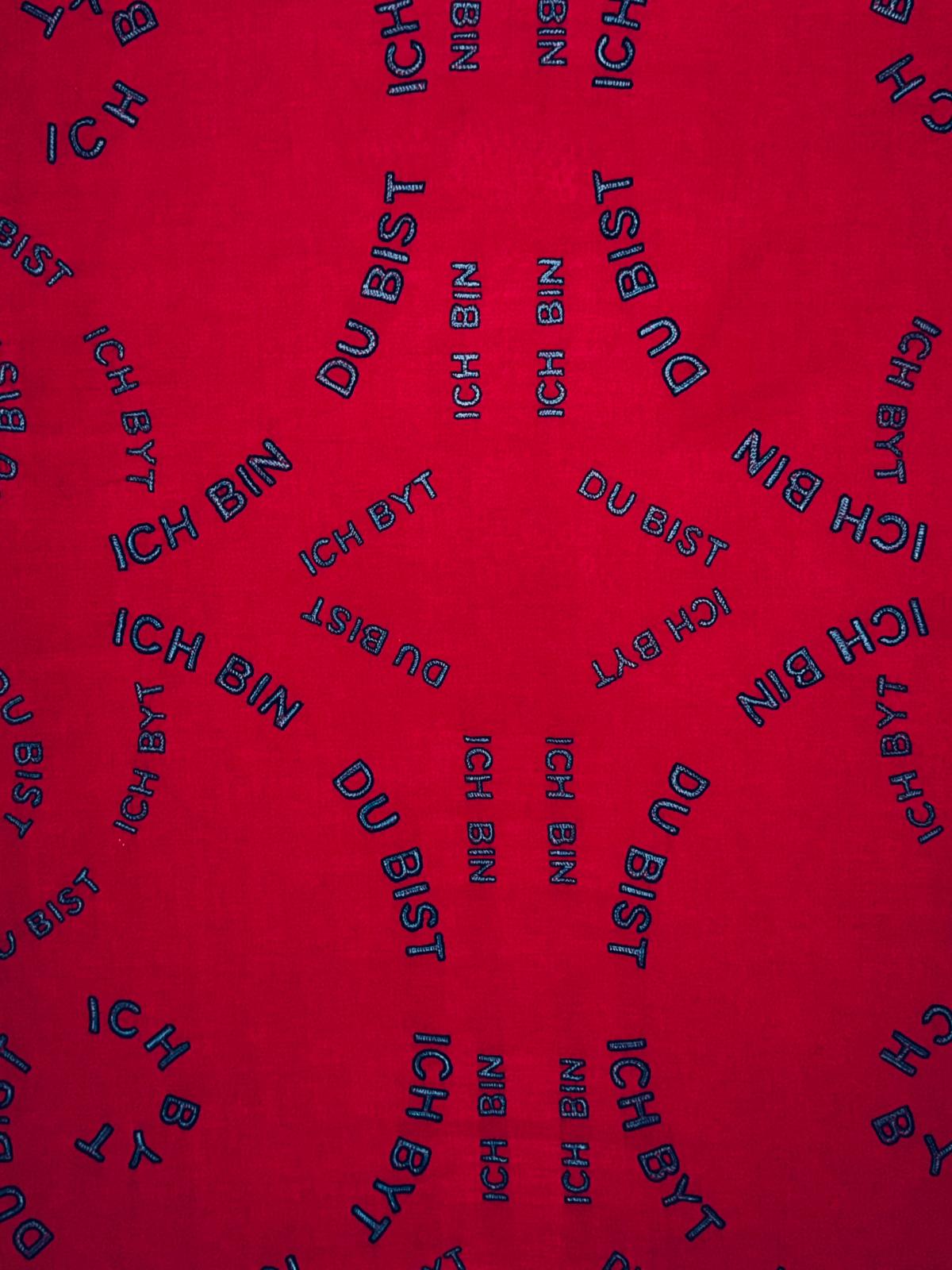
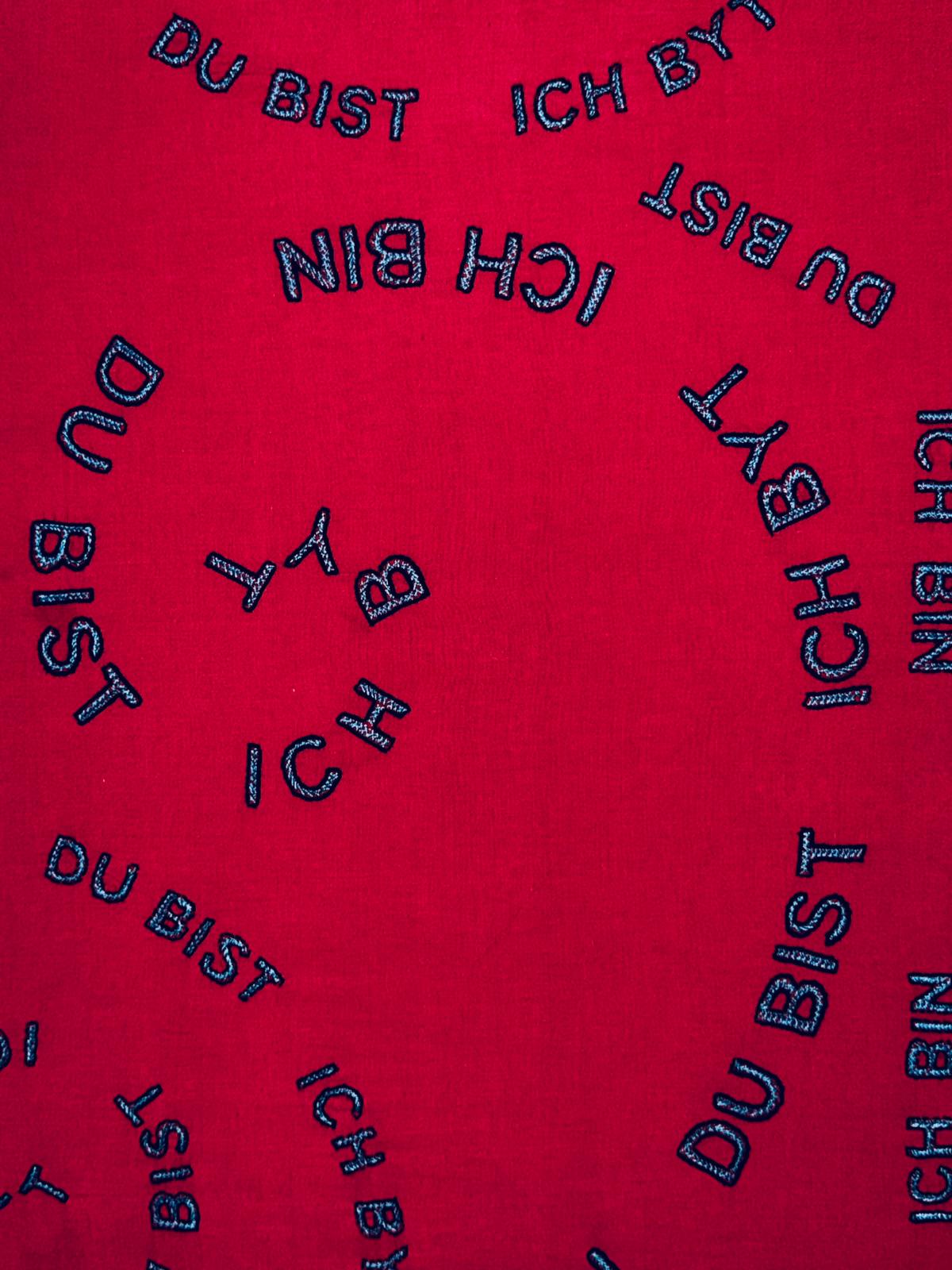
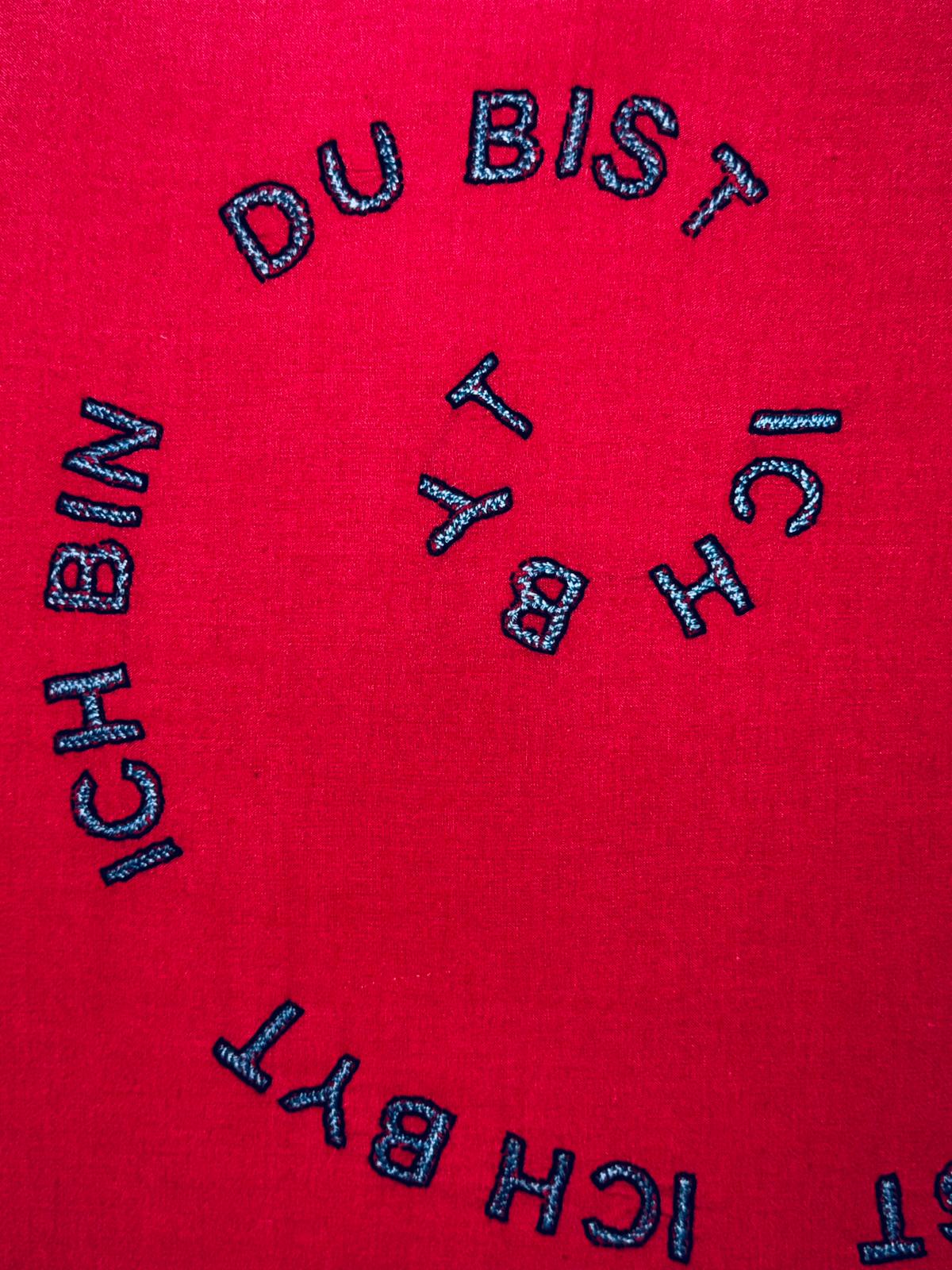
The work Ich bin du bist ich byt begins with the German verb sein, meaning “I am”, “you are”, “they are”. The starting point is the correct German conjugation set alongside the Polish language. In the final part a deliberate shift in meaning and sound appears. Instead of the correct bist, the Polish word “byt” is introduced. It sounds similar, but means something entirely different. In this way a linguistic hybrid is created, suspended between two languages, partly readable and partly foreign.
This apparent error in the phrase ich byt is not a mistake. It is a conscious gesture that shifts attention away from grammatical correctness toward the meaning of the verb “to be” itself. The conjugation of the verb stops functioning only as a linguistic rule and begins to act as a declaration of existence. “I am” and “you are” appear here as forms of affirming being, but also as something that can be questioned. In this sense the work addresses the relationship between language and power over existence, between the possibility of naming oneself and the possibility of being recognized by others.
The text was repeatedly hand embroidered onto fabric and arranged in the form of a Fibonacci spiral. This structure, commonly found in nature, serves here to organize language. The letters follow a rhythm of repetition and growth in which the verb “to be” constantly returns and subtly changes. This is not ornament for decoration, but a record of duration, time, and process.
The hand embroidery emphasizes the physical, bodily dimension of the work. The words are not only signs to be read, but traces of manual labor, repetitive gesture, and real bodily presence. Language is literally stitched into the fabric in a slow and demanding way, standing in contrast to its everyday, automatic use. Embroidery becomes a form of repetition in which language, body, and time are woven into a single process.
The work Ich bin du bist ich byt speaks about being in between. Between languages, between correctness and error, between grammar and the lived experience of existence. This small phonetic and formal shift reveals tensions embedded in the very act of speaking about being, showing that language does not only describe reality, but actively co creates it.