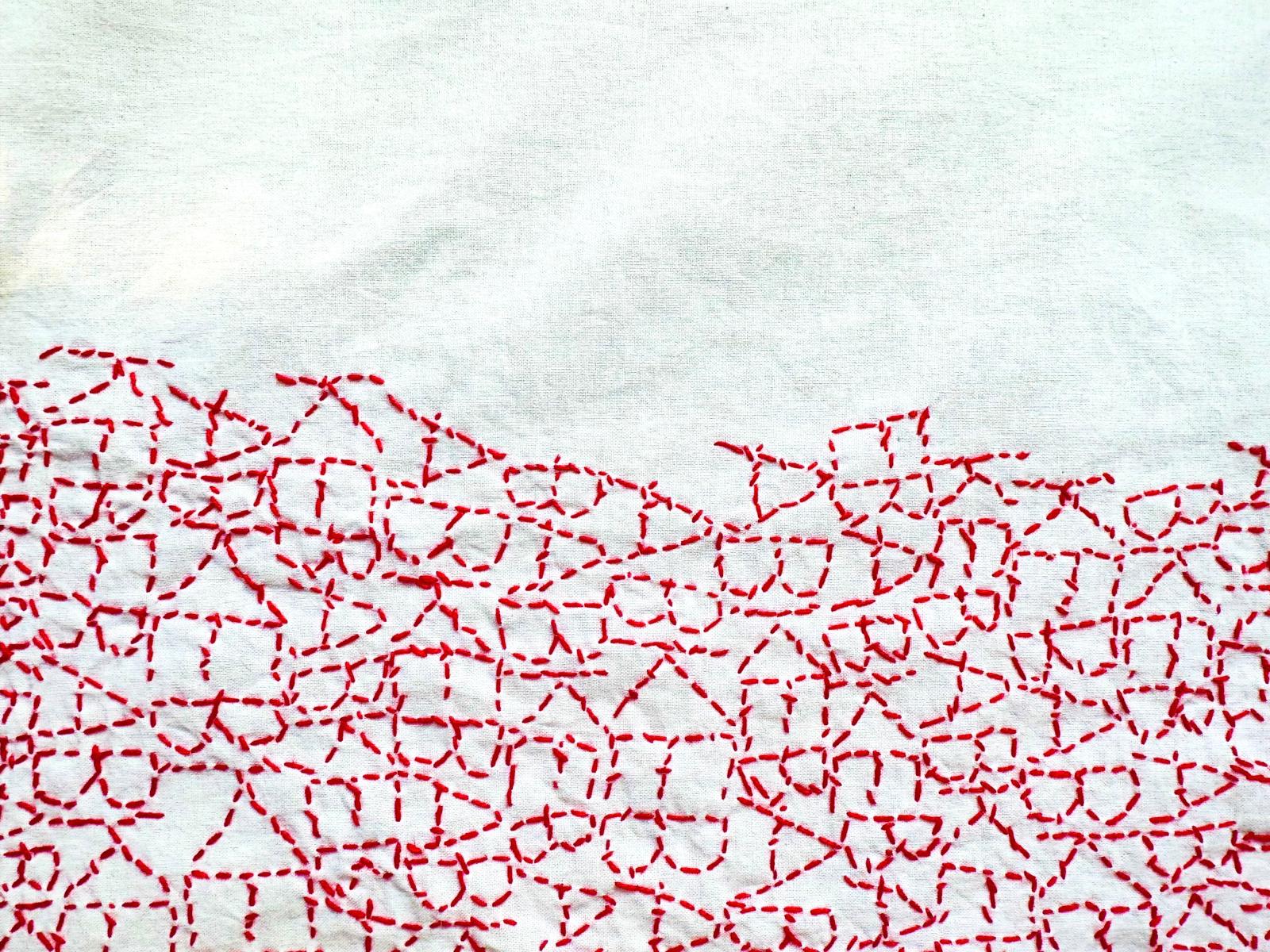
Poland 2025
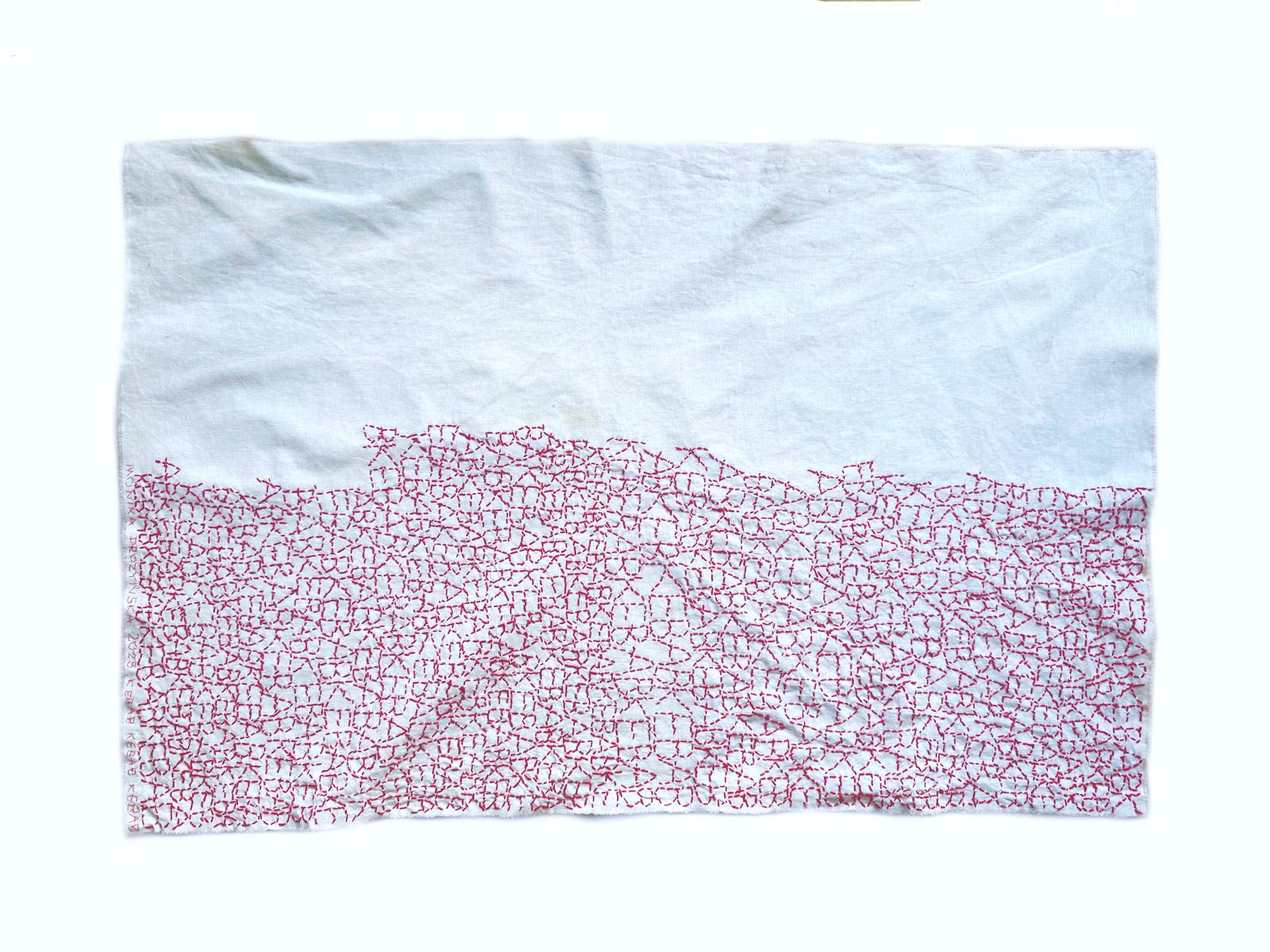
Hand embroidery on fabric
2025
50x77 cm
Kebab, one of the most recognizable forms of street food in Poland, clearly shows how much Polish society has changed since 1989. When Poland opened its borders and economy and migrants began arriving in the country, new flavors and new ways of eating appeared in cities. Kebab very quickly became part of everyday life. It turned into something normal, even though the people who made and sold it often remained on the social margins and were largely invisible.
In the Polish context, kebab is not just food. It is also a place where issues of migration, labor, visibility, and belonging come together. It is everywhere in public space, while at the same time standing in sharp contrast to ongoing debates about national identity, cultural “purity,” and exclusion. This work treats kebab as a carrier of migration histories and a rather uncomfortable symbol of globalization. It shows how something seemingly banal and everyday can expose hidden tensions, power relations, and contradictions within contemporary Polish society.
A kebab shop is also one of the most democratic places in Poland. At a single counter, people with very different views meet, from different backgrounds, with different skin colors, speaking different languages. For a moment, divisions disappear, and what matters is that everyone is standing in the same line and eating the same food, despite their differences and opposing beliefs.