Self-seeders
HOS Gallery, Warsaw
Curator: Katarzyna Piskorz
They sow themselves, growing from seeds that have freeloaded here by gravity and gusts of wind. Self-seeders are untamed and uninvited, and as they grow without human intervention, they are often subject to control or eradication by the established order. A selection of the work of three generations of women artists featured in the exhibition evokes the associations of independence, determination and toughness encapsulated in nature.
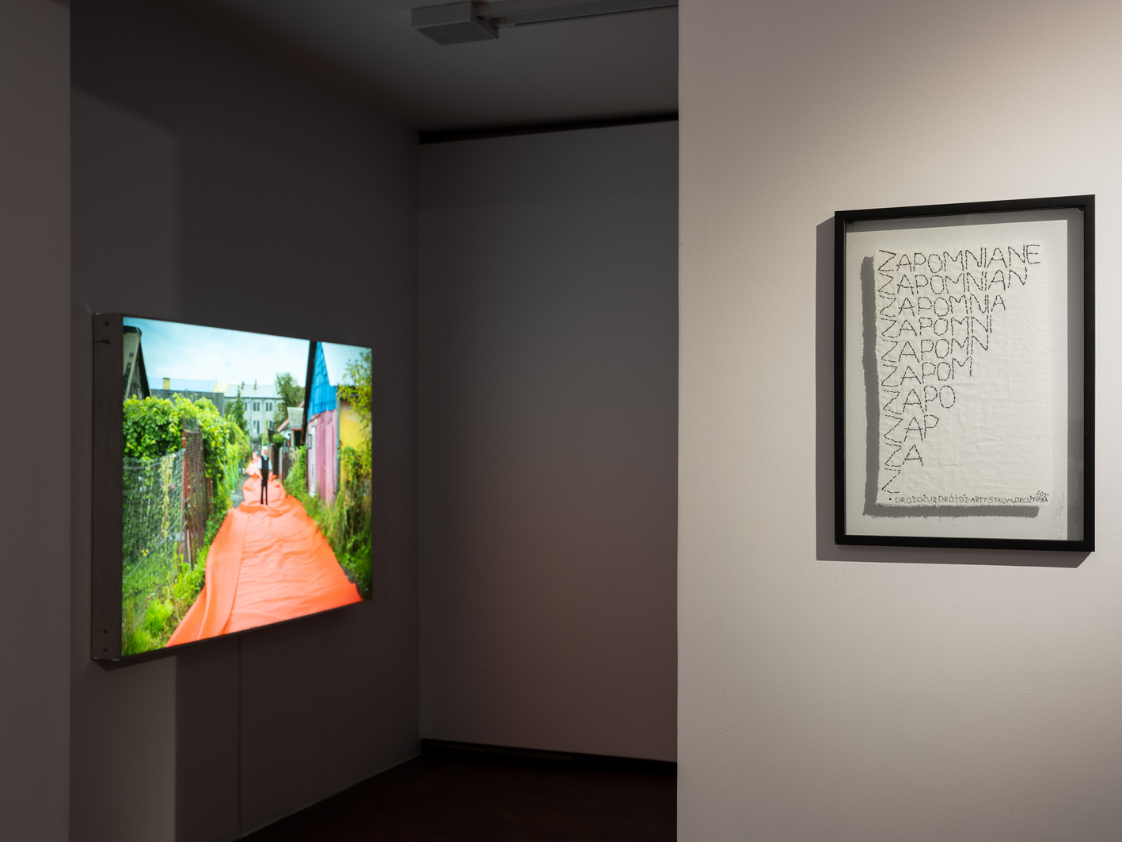
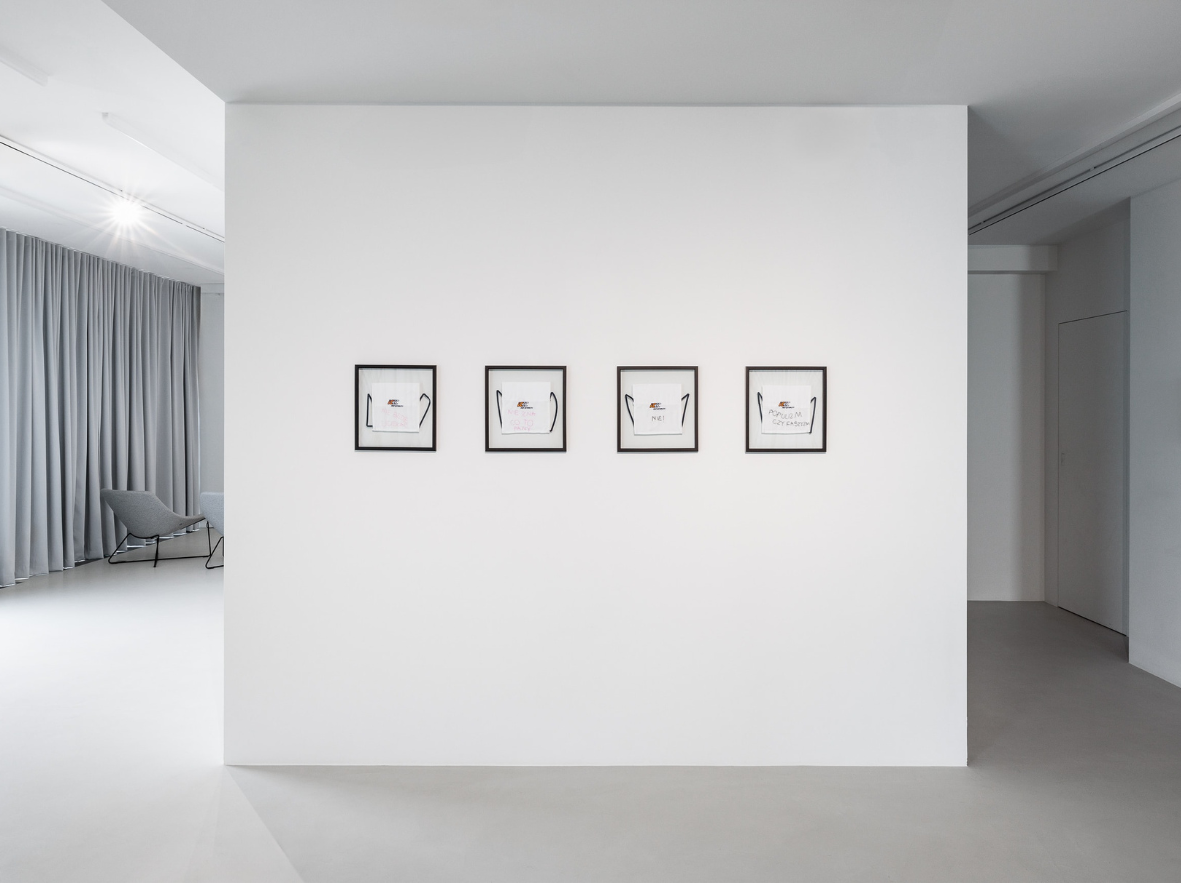
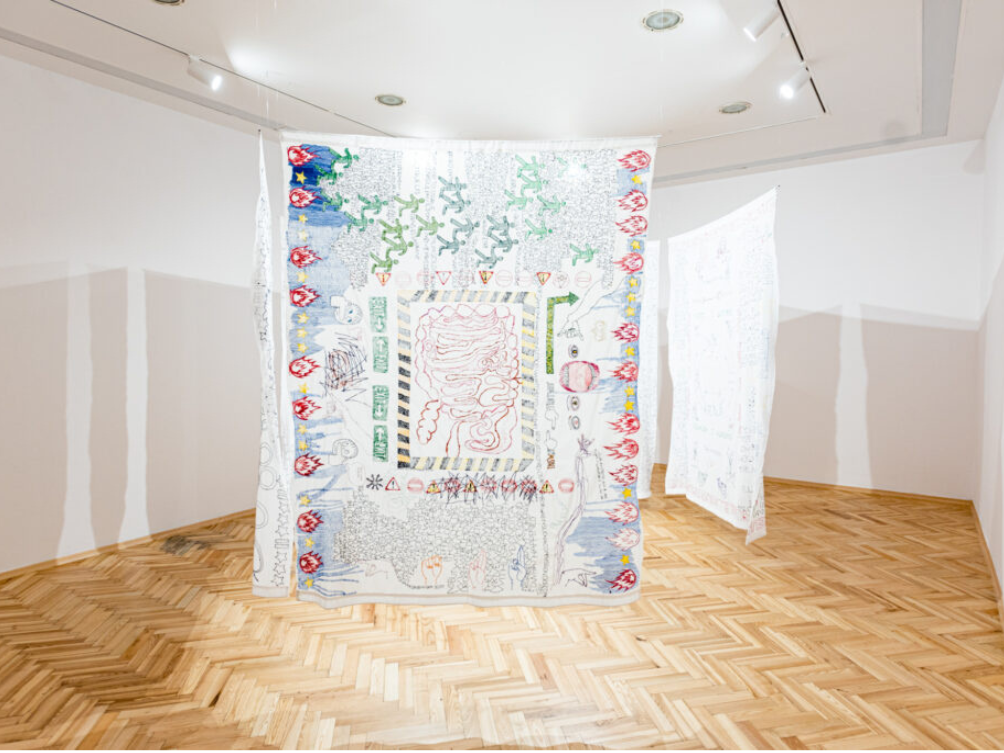
Monika Drożyńska calls herself a ‘die-hard embroiderer’ who skilfully combines a technique associated with ornamentation with the role of an activist involved in social projects. Her text embroideries can be found in the form of slaps, lurking in the corners of the urban fabric, or as small acts of vandalism, embroidered on the headrests of Polish Railways. Her feisty works are the result of a cultivated distance, often addressing political issues and challenging the established order to make room for what provokes emotion, discomfort and dissent. In her work, the artist analyses the role of language, which can be both inclusive and exclusive, creating divisions and animosities. Language shapes and changes our reality, so it is important to fight for the ability to speak freely, without discipline and subordination. The word ‘nature’ is feminine in most languages, usually evoking connotations of motherhood and fertility, but its moisture and tenderness can also shift the gaze from mother to lover. This is also the theme of ‘The Gospel to the Hags’, which was to be performed in the production of the play ‘Heksy’ [‘Hags’] by Agnieszka Szpila at the Dramatic Theatre in December 2023. Hags, the counterparts of the witches from Szpila’s novel, are women who have made a pact with the Old Maid and make love with nature as part of rituals, becoming advocates of a new kind of eroticism – eco-sexuality. Drożyńska employs fabric, a soft and expansive material, in contrast to the rigidity that symbolises both patriarchal power hierarchies and the rigidity of art canons.
The narratives presented in the exhibition speak of women’s burgeoning strength, resilience and awareness of the need to constantly strive to realise and transform themselves. Not to resist difficulties, emotions, rebellions and pleasures. Experiences, even the difficult and unpleasant ones, shape sensitivity, nourish intuition, emotionality and a creative attitude. The need to express these values is deeply rooted in many women artists, who are in constant need of natural development. Stifling intuition, humility and stagnation are against their nature. Thus, in full readiness for the new, in fear of atrophy, even the slightest breeze is seen as a reason for action, self-determination and blossoming.