Tablecloths
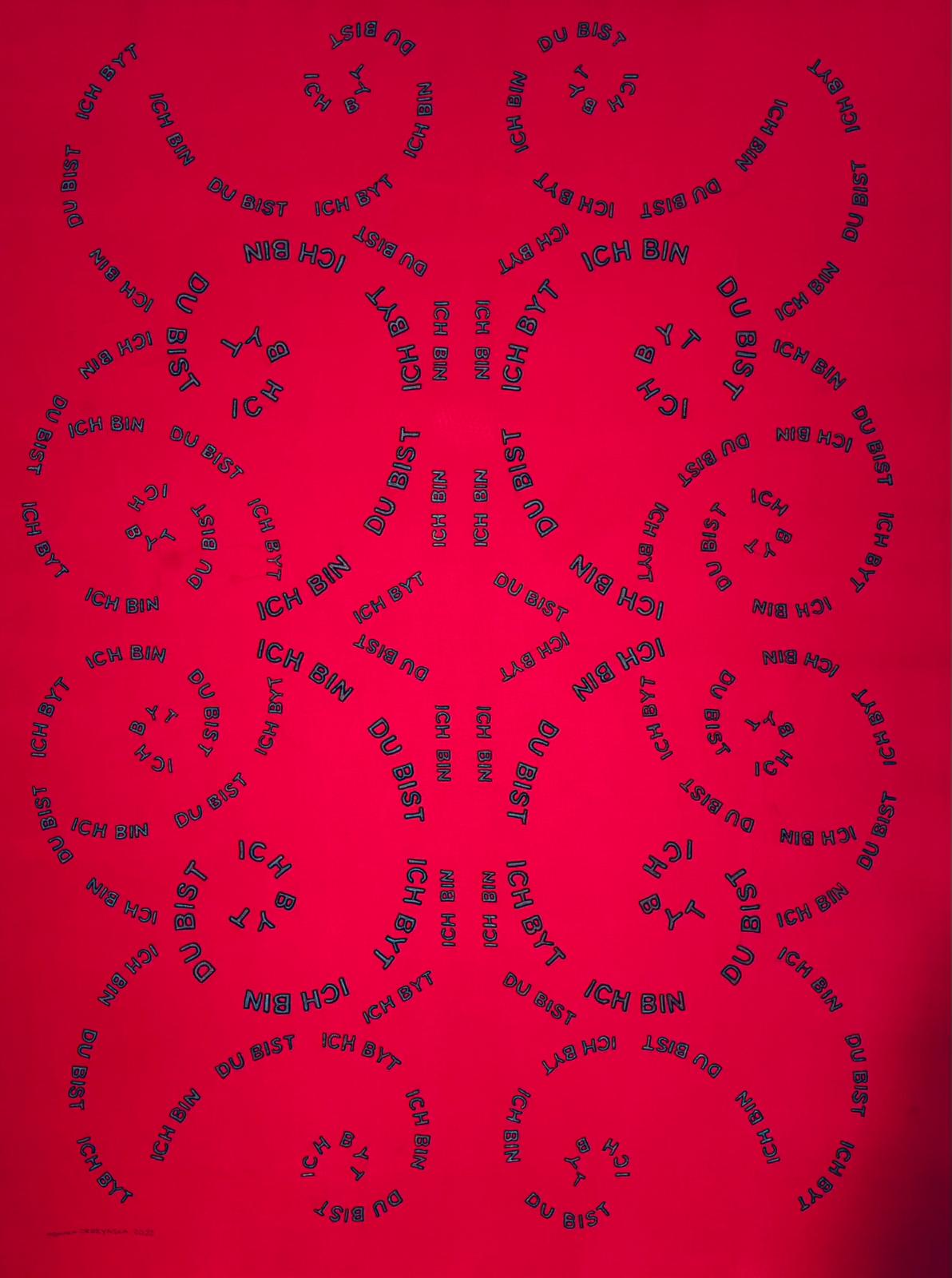
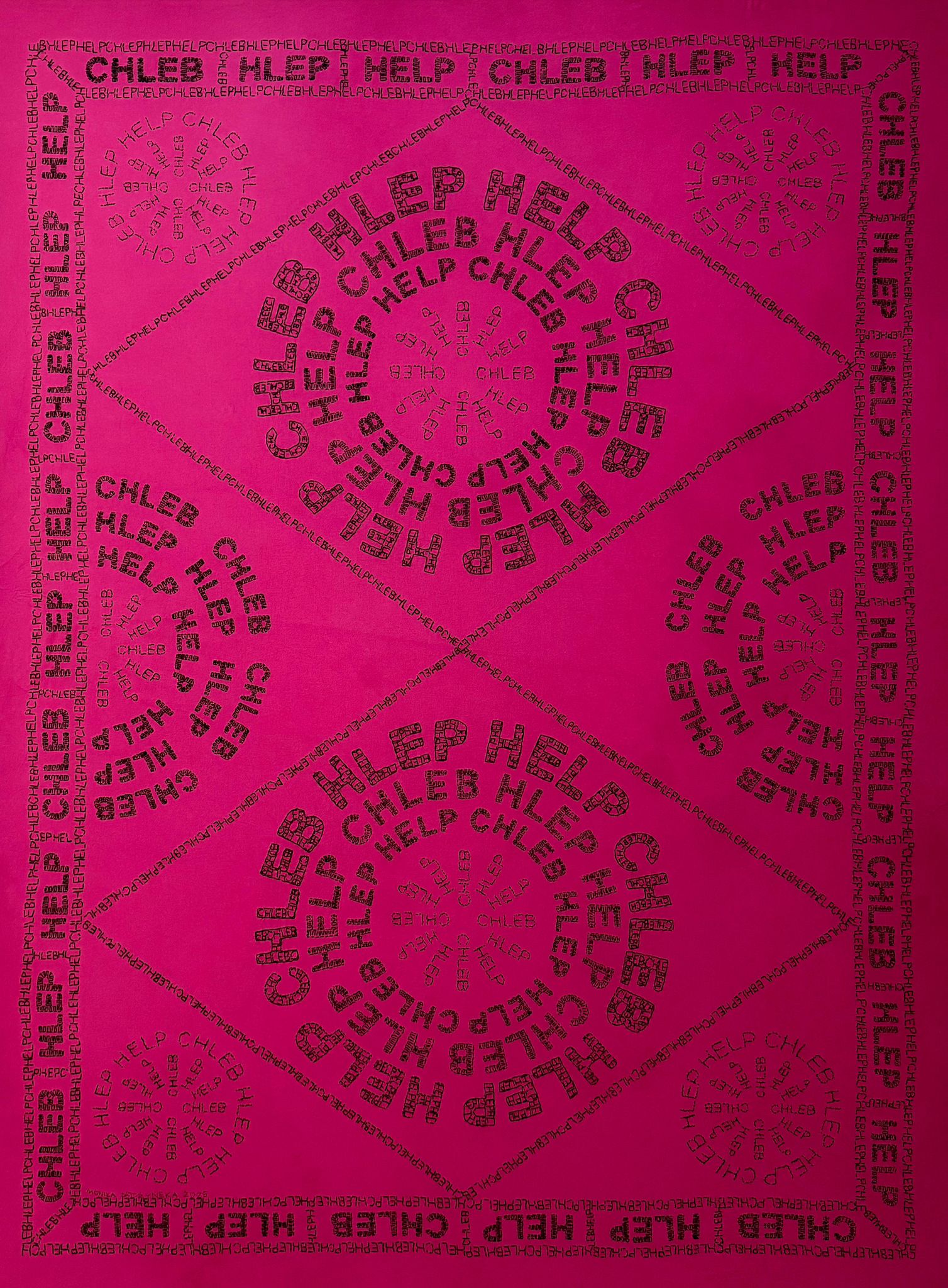
Hand embroidery on cotton fabric
2019-
Dimensions 220 x 160 cm
A series of artworks covering a wide array of subjects. Each piece of fabric is a kind of essay on issues such as the phenomenon of household detergents from Germany, walls, teeth, or dogs.
The tablecloths were embroidered using sign language iconography, prison tattoo symbolism, Morse alphabet, Braille, road signs, evacuation signs, warning signs, information boards, iconography of political systems, logos of corporations, graphics illustrating social movements, Victory hand gesture, Georgian, Arabic, and Afrikaans alphabets, graphic drawings of constellations.
In Polish, historically, the word obrus [tablecloth] referred to a ścierka, a cloth. In Old Polish, the related verb, brusić/bruszenie meant ścieranie, or to wipe, and it was not until the late Middle Ages that cloths were used to cover tables. Within the single word obrus/tablecloth, different texts, signs, images, and communities are all interwoven together.
The tablecloth is a plane for an encounter. It links together the cup, the plate, the hands, the body, the thoughts of the guest and the host. Everyone lives under the same stars, distanced; proximity is a threat. The tongue is tangled, blue and knotted. The letters are ornaments. Gestures are words. Logic, reason, and proportion have all failed. The fruit compote is tart, the soup is sweet, the cake is bitter. The hands on the tablecloth are connected and safe.