UAPLGB
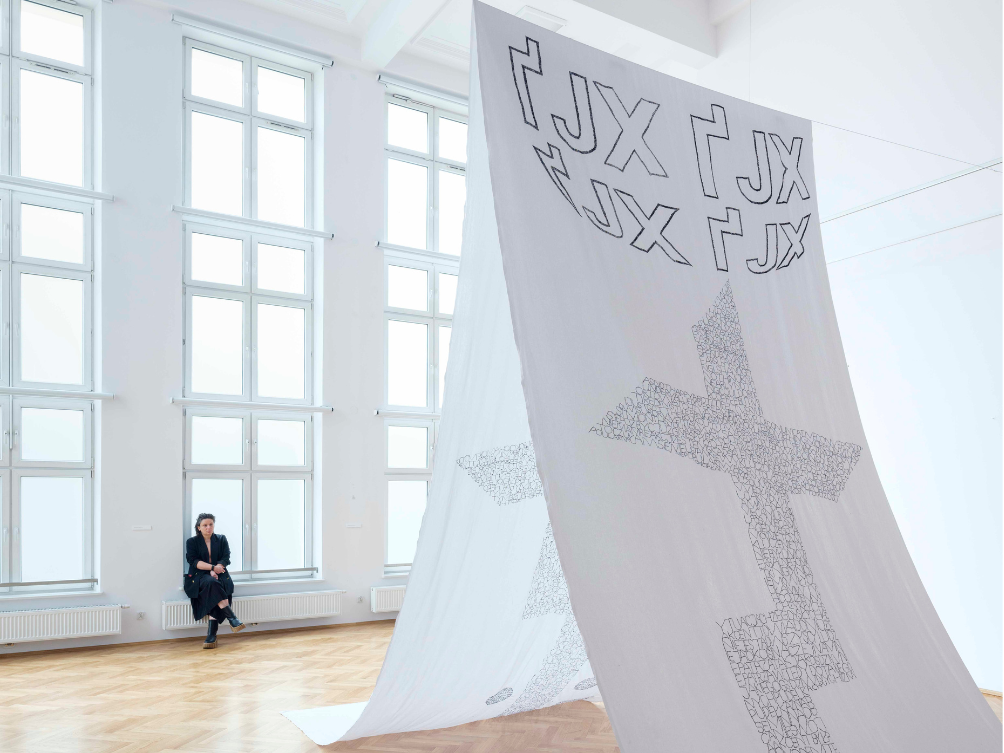
Hand embroidery on cotton fabric
2022
1100 x 220 cm. Photos: Mateusz Torbus and Michal Algebra courtesy of the Emigration Museum in Gdynia
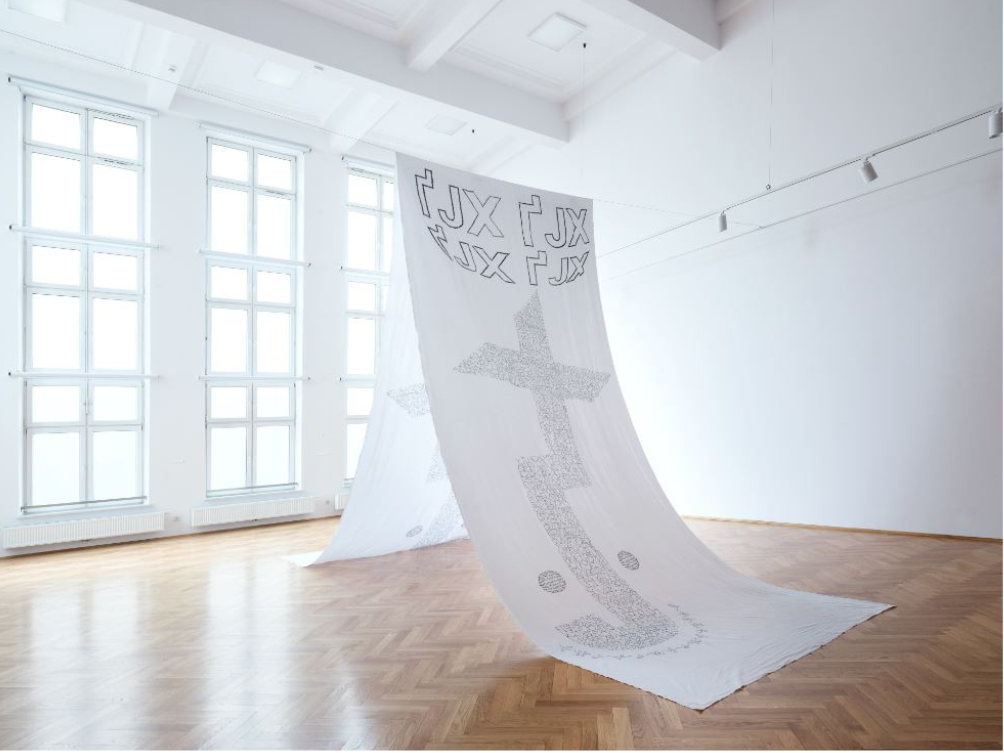
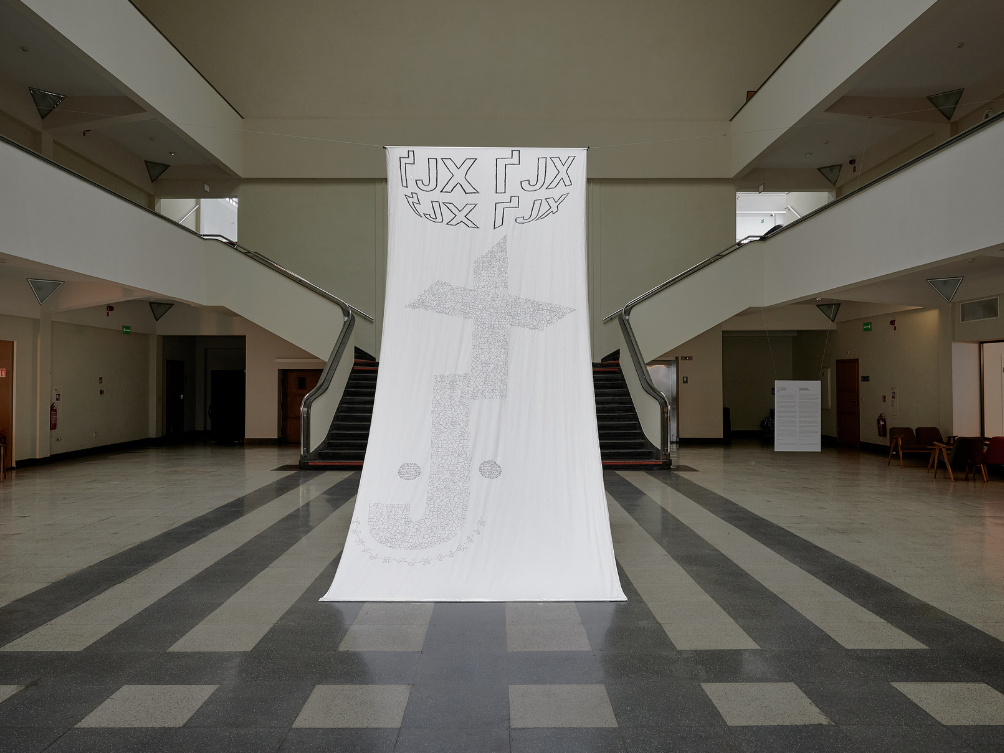
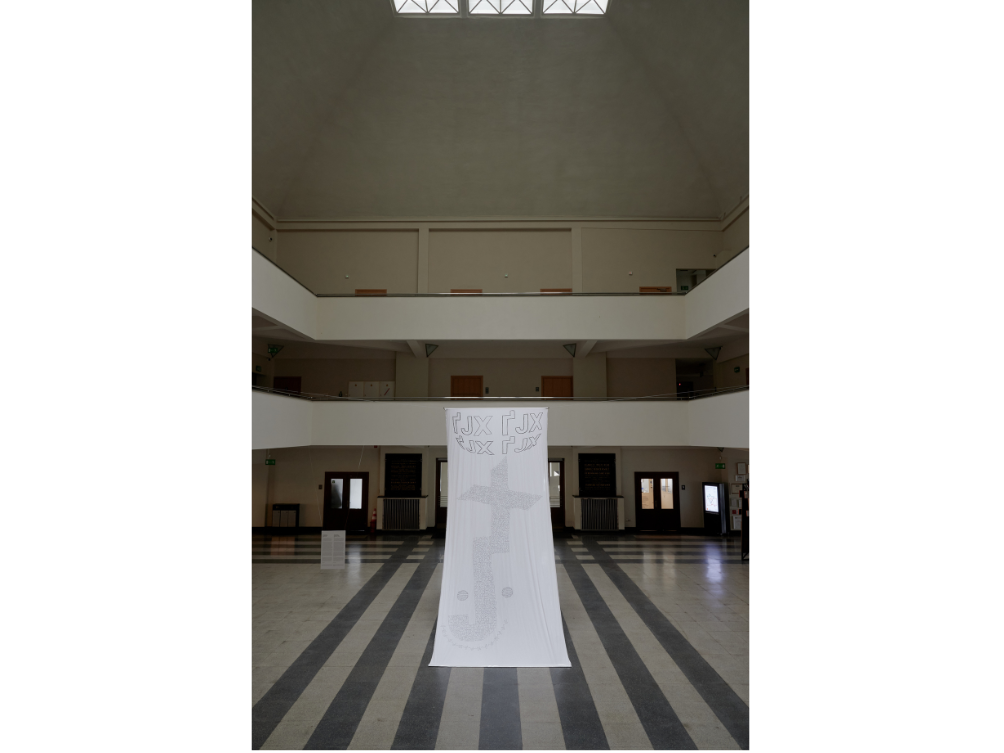
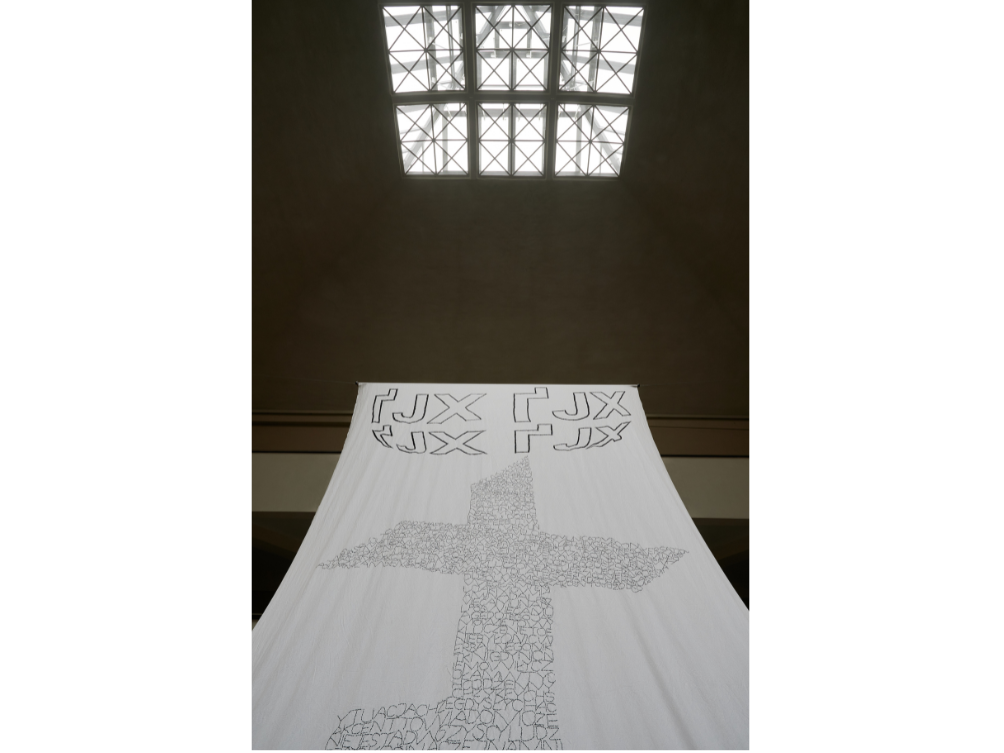
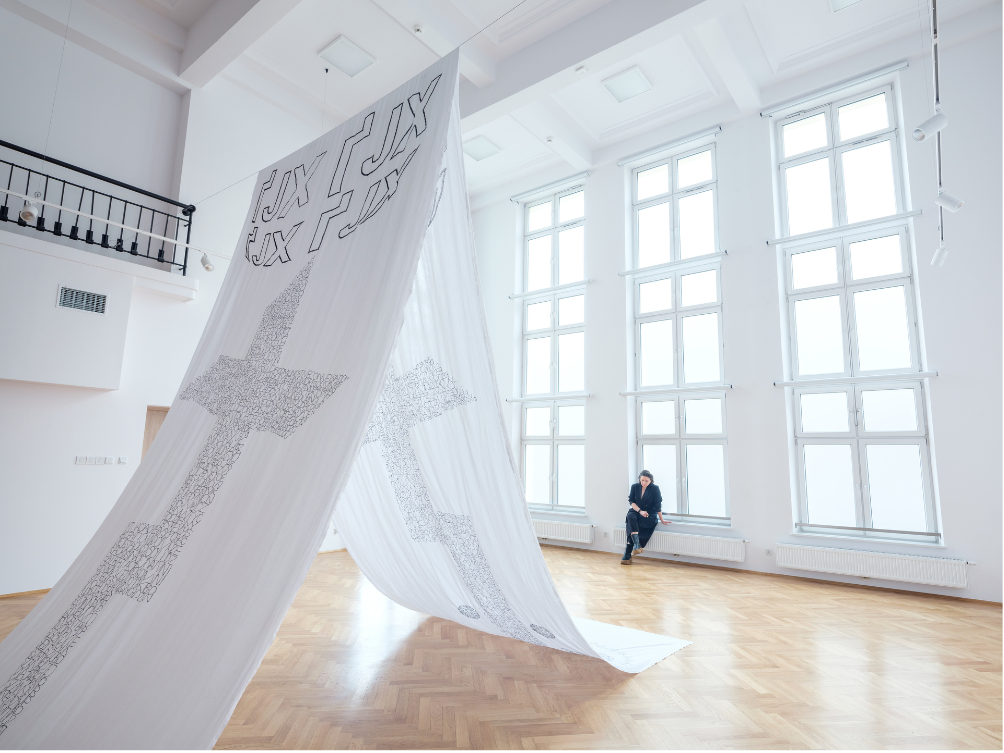
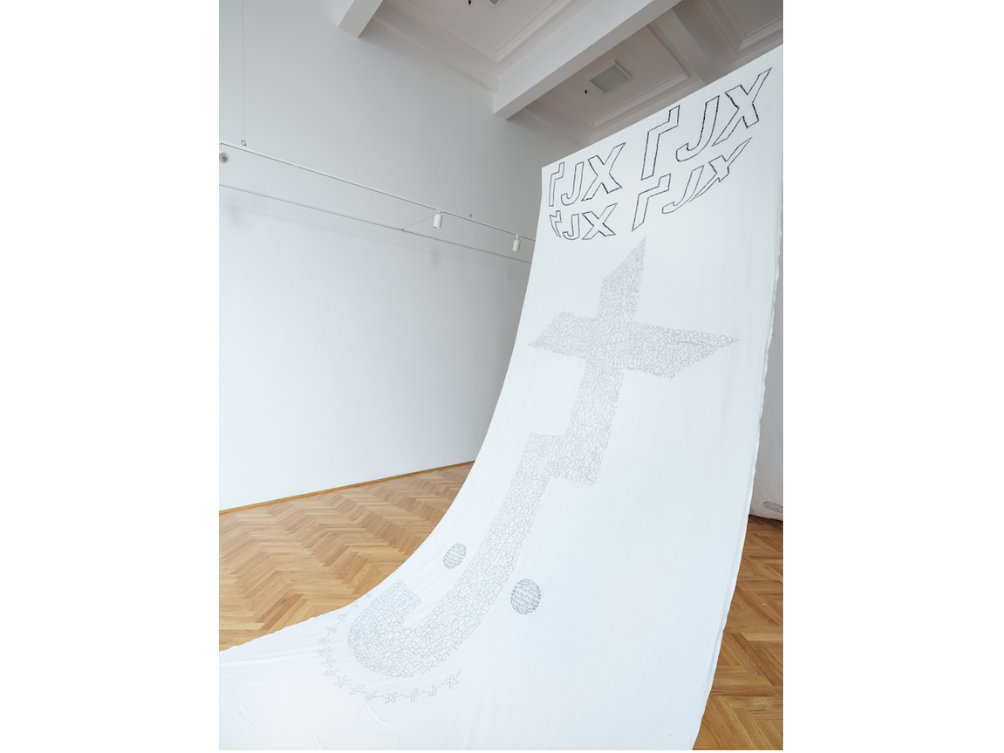
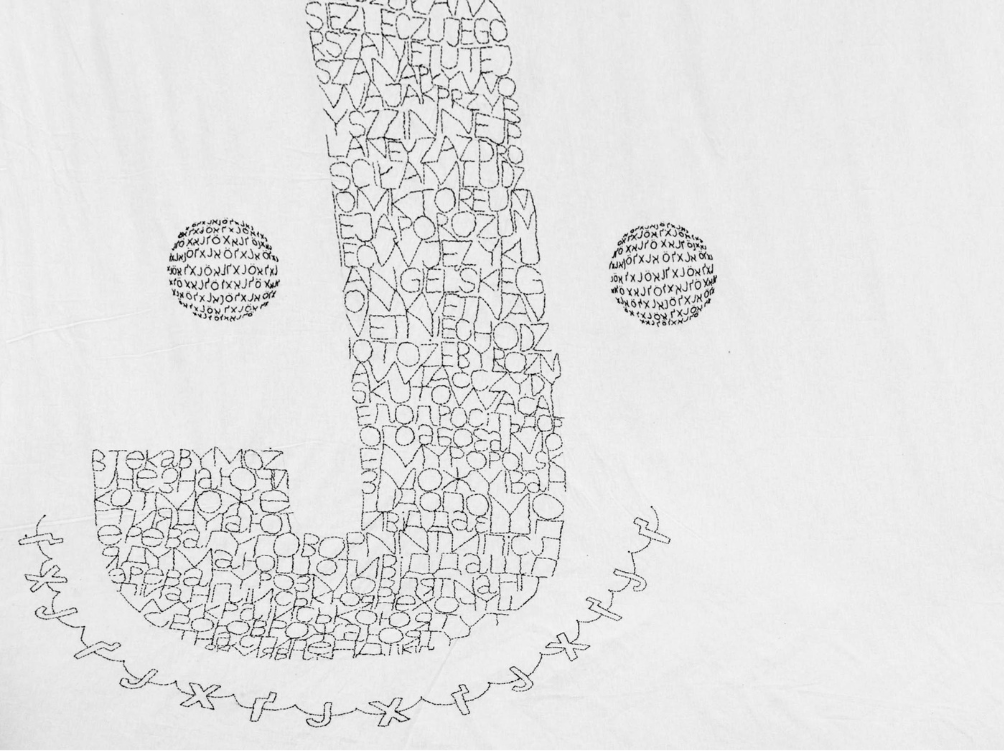
The sculpture is covered with a pattern combining three letters – Ґ, J, and X. It also features records of conversations about assimilation or lack thereof conducted with migrants. Bringing to mind Katarzyna Kobro’s “social sculptures”, the work combines action with language, engagement with spatial form, and social themes characteristic of the early 21st century avant-garde. Drożyńska chose her protagonist – the three letters – by breaking down the Polish, Ukrainian, and English alphabets. She merged the letters into one sign, leading to a kind of métissage – a combination of different elements. The term Mestizo, a key element of Chicana feminism, comes from Latin mixticius, meaning mixed [person of mixed descent].
Drożyńska tells the story of experiences that occurred at the intersection of cultures, languages, and countries. The transcribed contents of interviews carried out as part of her research, focusing on people with experiences of migration, are written/embroidered on the fabric in English, “Ponglish,” “broken English,” Polish, and Ukrainian. In this way, the artist alludes to the mixing of languages described in the biblical story of the Tower of Babel and to the nomadism of contemporary societies.
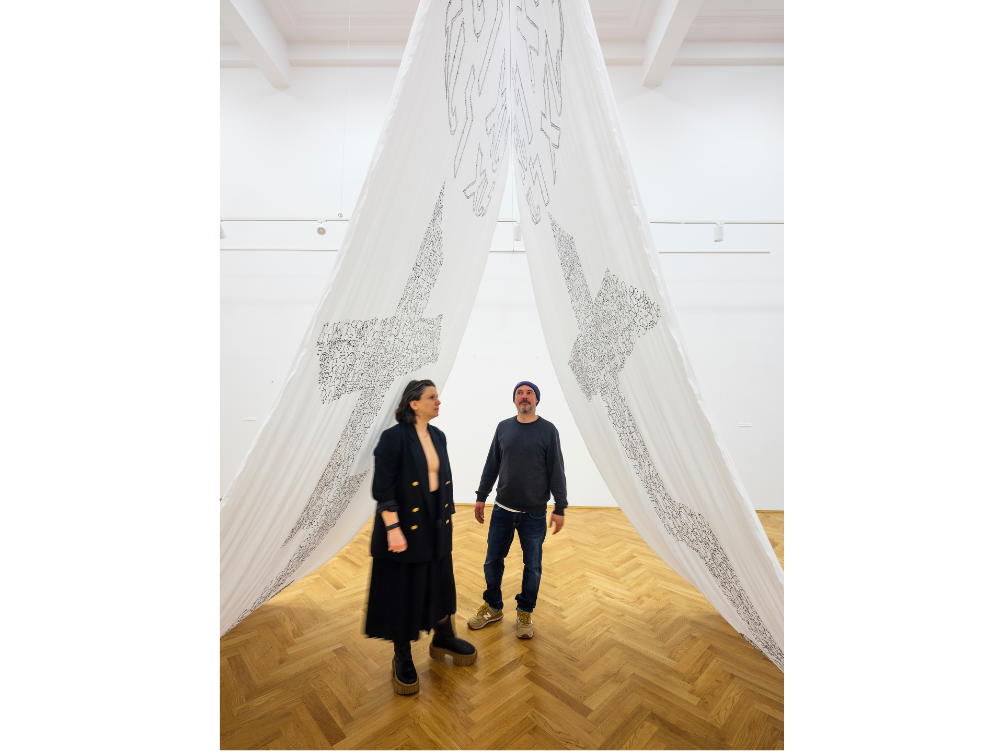
The combination of seeing and reading the fabric and being able to go inside it is a moment when language becomes sculpture and can be experienced both intellectually and symbolically as a subconscious activity.The reverse side of the written embroidery (which can be experienced by going inside the sculpture) features an abstract message. Language is an artificial, constructed creation. It can divide and be the root of conflicts and wars. One of the interviews featured a story about exclusion resulting from one’s accent – Drożyńska writes it down in the shape of a letter J.
The artist’s recorded the feeling of rejection she endured when she spoke because of her strong accent. The shape of her work also alludes to a tent, a shelter: language can be both a source of oppression and a tool of liberation. The letters hold hands, as if they have found a shared space of love. In this artwork, a hand squeezes a long, twisted tongue emerging from a mouth. Like a flower set on a long, twisted stem, the blossoming tongue is “tied” by the hand. Next to it, we can see a couple of wolves howling to the moon, as well as a shape derived from a combination of letters that brings to mind various other words.